

Problem statement: what breaks when displays grow
Big LED projects fail for predictable reasons: panels that can’t be serviced, power systems that sag, content pipelines that choke, and brightness that fades under sun. When you move from a single demo panel to a city façade or stadium scoreboard, those single-point failures multiply. You need an architecture that treats each display as a distributed system, not a single appliance — and that starts with choosing the right outdoor module. See a practical product line here: outdoor led screen.
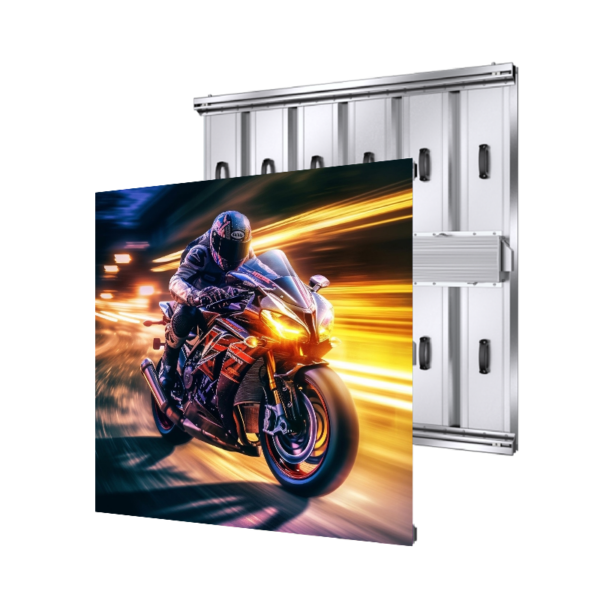
Core constraints to diagnose first
List hard limits and measure against them. Pixel pitch defines viewing distance and data rates; target at least 1.5–3× the intended closest viewing distance in millimetres. Brightness must hit 5,000–8,000 nits for direct-sun exposure. IP rating and UV resistance govern enclosure choice; aim for IP65 or better with proven corrosion resistance in coastal zones. Thermal load drives cooling and power-supply sizing; calculate peak consumption per square metre and budget 20–30% overhead for redundancy. Connectivity needs include local control (Ethernet/UDP), a resilient WAN path for remote content, and a monitoring telemetry channel.

Architectural patterns that scale
Design like a cloud system. Use modular panels that map to logical tiles; each tile has local intelligence for health reporting and fail-over content. Adopt a distributed control plane so one failed controller doesn’t darken an entire face. Push edge rendering for high-frame content and use a CDN-like approach for playlist and asset delivery. Include watchdogs and cold-reboot policies inside controllers. For physical resilience, specify serviceable front or rear access, hot-swappable power modules, and a grounding scheme that handles lightning surge with tested SPD placement.
Common mistakes and how to avoid them
Buy the smallest pixel pitch you can’t justify; it’s expensive and harder to maintain. Assume cabling will survive without strain relief. Under-provision power feeders and then expand later — you’ll need new infrastructure. Forget calibration plans; color and brightness drift quickly without regular tools and protocols. Skip environmental testing; thermal cycling and salt fog are killers in real installations. Address each mistake with a measurable mitigation: spare parts per 100 m2, documented service routes, scheduled color-calibration procedures, and an HVAC plan where necessary.
Alternatives and trade-offs
Projection and rear-projection systems work for controlled light environments but require enclosures and aren’t sunlight-competitive. Fine-pitch LED gives crisp legibility at close range but increases repair complexity and cost. Rental modules prioritize portability and speed of deployment; permanent builds should prioritize longevity and maintainability. Choose based on use case: permanent civic signage needs durability and redundancy; event signage needs quick serviceability and throughput.
Experience, standards and real-world validation
Years of field deployments show that standards and visible benchmarks reduce surprises. Follow IP (IEC 60529) and surge specifications; test luminance per ASTM or IEC brightness measurement methods. Major installations — think Times Square installations that demand continuous high-brightness uptime and predictable cadence — set practical benchmarks for maintenance and brightness retention. That real-world benchmark aligns with outdoor product families like this one: outdoor led display screen. Maintain records: MTTR targets, spare inventory, firmware-change logs, and periodic photometric reports.
Deployment checklist — concrete actions
Do these items before sign-off: verify pixel pitch vs. viewing distance; confirm peak and average power per panel plus 25% headroom; run a thermal model and physical airflow test; confirm IP and corrosion specs for your environment; design a monitoring dashboard with per-panel telemetry; plan a spare-parts kit and service access map; schedule calibration at 30, 90, and 365 days after install; and run a fail-over test that simulates controller, power, and network outages.
Conclusion: the scalable solution that works
Treat outdoor LED projects like distributed systems engineering: define limits, build modularity, instrument everything, and enforce maintenance. That combination of modular panels, edge resilience and standards-backed testing produces predictable uptime and readable imagery across seasons and crowds — the exact approach reflected in many long-running outdoor implementations from HDC.

