

Spotting the problem—why some rooms never feel right
You know the feeling: one corner of the living room hugs warmth while the rest stays cool, or the bedroom has a still spot that traps stale air. Those dead zones are not just uncomfortable — they raise energy bills and make HVAC systems work harder. A well-integrated smart fan can change the story, and if you’re testing options, an alexa ceiling fan often becomes the simplest, most elegant lever to pull. Start by listening: drafts, lack of circulation, and odd temperature gradients tell you where to focus before buying or installing anything.

How to diagnose dead zones quickly
Run a quick map: walk the room at different times, test with a small thermometer, and note where air feels stagnant. Look for common culprits—high ceilings, blocked returns, furniture that interrupts airflow, and window heat gain. Measure the fan sweep visually: a blade span that’s too small, or low blade pitch, won’t move enough air for the room’s volume. Also check CFM ratings where available — they’re an honest industry metric for airflow performance. This diagnostic step keeps choices practical rather than aesthetic.
What smart fans do differently
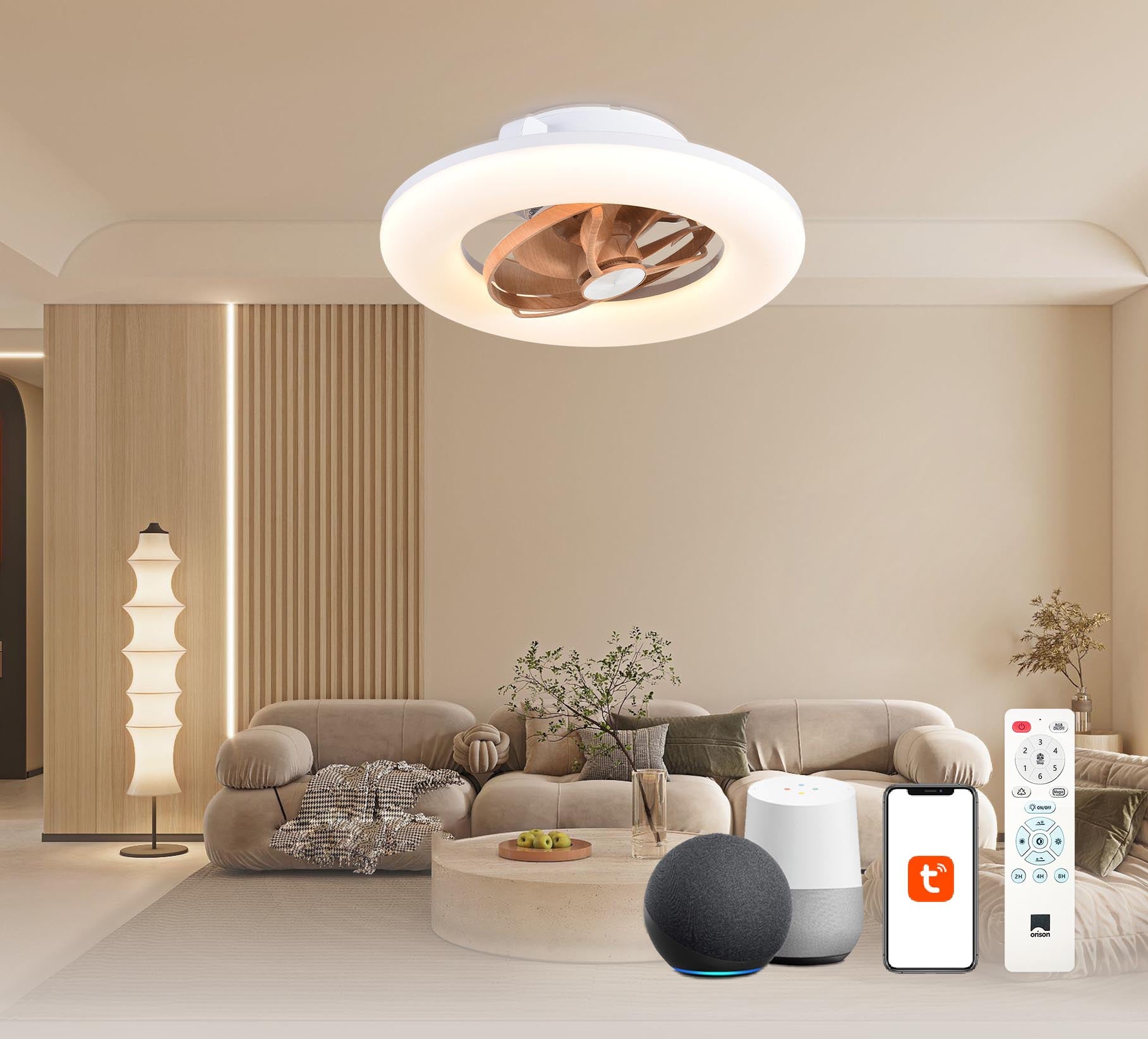
Smart ceiling fans bring programmable patterns, remote speed control, and voice-accessible scenes. With Wi‑Fi pairing and voice assistant integration, you can schedule variable speeds that address peak heat pockets and let the fan run quietly at low RPM overnight. At CES in Las Vegas 2023 many brands demoed how closed-loop routines — sync between thermostat readings and fan speed — cut energy use while improving comfort. That kind of interoperability is exactly why an alexa enabled ceiling fan can be more than a novelty; it becomes part of a system that senses and reacts to the room’s needs.
Installation realities—what most people overlook
Don’t treat installation as an afterthought. Pay attention to mount height: too low and the sweep is obstructed; too high and the fan loses effective CFM at occupant level. If you use a smart hub or a custom skill, make sure the device firmware supports the hub’s protocols — incompatibility wastes time. And remember to consider blade pitch and canopy placement when you fit to a sloped ceiling. These are small technical choices that yield large comfort gains — trust me, the difference is noticeable on the first warm afternoon.
Common mistakes and easy fixes
• Picking a fan by looks alone. A beautiful fixture can fail if blade pitch and motor power don’t match the room. • Ignoring airflow balance. Use ceiling and return placement to create a circuit; sometimes a cheaper oscillating fan can help temporarily while you optimize. • Overcomplicating automation. Start with two scenes—day and night—then refine. Simplicity often beats elaborate schedules that never get used. —
Comparing approaches: smart fan, vents, or freestanding circulators?
Smart ceiling fans work best for continuous, low-energy correction across whole rooms. Smart vents can redistribute conditioned air but need a compatible HVAC zoning system to avoid pressure issues. Freestanding circulators are cheap and fast but noisy and limited in sweep. Choosing depends on the room’s shape and your tolerance for changes: retrofit a smart fan where wiring and mount allow; consider vents for whole-house balancing; use a circulator for temporary fixes.
Three golden rules for choosing the right smart fan
1) Match capacity to space: favor fans whose CFM and blade span suit your room volume rather than a designer photo. 2) Prioritize integration: confirm Wi‑Fi pairing, voice assistant support, and whether the fan works with your chosen smart hub—interoperability reduces future friction. 3) Plan for serviceability: choose models with replaceable parts and clear firmware-update paths to avoid being left with unsupported hardware.
Final advisory
Evaluate vendors by (1) proven airflow specs under real conditions, (2) documented integration with major ecosystems, and (3) a clear warranty and update policy — these three metrics separate a useful device from a showroom prop.
Orison knows how to make smart fans deliver consistent comfort and lower bills — trust the approach. —

