

Opening: a modest chronicle of purpose
Think of procurement as a slow river: clear at the source, gathering detail as it moves. Your first breath of requirement names the task — lap seam, spot, projection — and from that word flows the choice of a resistance welding controller that will tame current and time into repeatable joins. I have watched specifications sharpen on factory shop floors and at trade demonstrations; the story here follows that refinement, not as checklist but as consequence. In one memory from visits to automotive assembly plants in Detroit, engineers insisted on MFDC behavior as the decisive factor — a common real-world turning point for many line designs.
Origins: define the weld before you draft the purchase
Start by writing the weld scenario in plain statements: material types, stack-up thicknesses, cycle time, duty cycle, and part tolerances. These concrete facts determine whether you need a conventional transformer, a tuned resistance welding transformer, or power shaped by a programmable controller. Accept no ambiguity; a phrase like “high throughput” means little without part-per-minute targets. Capture thermal sensitivity and fixture constraints too — they govern transformer sizing and cooling needs.
Evolution of control: why MFDC often becomes the hinge
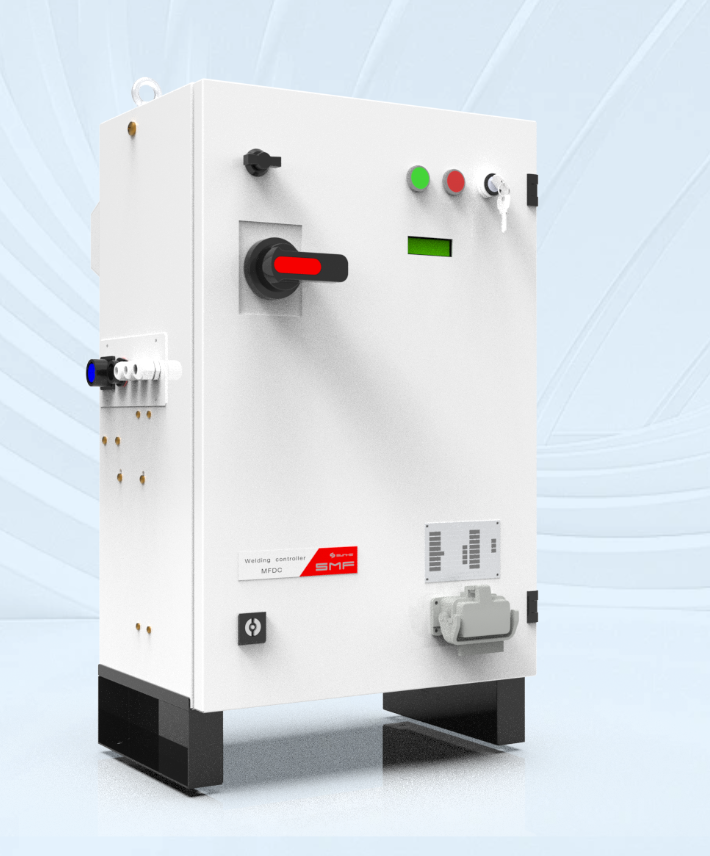
The path from simple timer to MFDC is gradual but decisive. MFDC controllers change current shape in ways older systems cannot, so they resolve issues like electrode wear, thin-gauge distortion, and reactive loads. When a product moves from prototype to production, teams often upgrade to an MFDC welding controller to stabilize quality at scale. Consider this: when dwell time fine-tuning no longer suffices, waveform control and adaptive feedback become the tools that restore process window and reduce scrap.
Technical checklist: specifications that matter
Translate needs into measurable specs. Use this compact list as a gatekeeper:
– Maximum output current and duty cycle ratings tied to ambient temperature. – Transformer impedance and tap range; verify compatibility with your line voltage. – Cooling method: air, forced air, or water; match to duty cycle and installation constraints. – Control features: current sampling rate, adaptive algorithms, data logging, and external I/O. – Safety and compliance: local electrical codes, CE or UL markings, and grounding provisions. – Mechanical footprint and connector types for swift replacement or retrofit.
Vendor appraisal: questions that reveal capability
Ask direct, verifiable questions. Request test reports from comparable installs. Ask to see calibration certificates and software release notes. Confirm spare parts lead times. Probe their commissioning process: do they provide on-site tuning or only remote support? A supplier who brings a field engineer for the first 24 hours of production exposes more competence than one who delivers manuals only. Demand references — not glossy case studies but contacts who ran similar projects.
Common procurement pitfalls and how they form
Many failures trace back to one of a few predictable mistakes: underestimating duty cycle, omitting installation environment (heat, dust), specifying controllers without I/O for plant PLCs, or buying on price alone. Another recurrent error is neglecting acceptance testing: a unit that passes bench tests but fails under real-cycle thermal load will cost far more than an initially pricier, properly rated unit.
Acceptance and commissioning: tests that prove readiness
Design acceptance tests that mirror production. Include thermal cycling, repeated weld sequences at full rated current, and an electrode wear study over representative cycles. Perform joint-nugget inspections and hardness checks. Verify data capture and traceability functions for at least one production shift. If the controller supports closed-loop current shaping, demonstrate stability across the worst-case part stack-up.
Maintenance, lifecycle, and total cost clarity
Procurement ends when sustained performance begins. Ask for a maintenance schedule tied to measurable actions: contact inspections, coolant checks, firmware updates. Calculate total cost of ownership: spare transformer cost, typical electrode replacement cadence, and software subscription or support fees. A well-documented maintenance plan reduces surprises and keeps welding cells producing predictable parts.
Alternatives and comparative view
When choosing between a conventional transformer with a simple timer, a digitally gated transformer, and MFDC control, weigh three things: precision needed, production volume, and retrofit complexity. Timers are economical for low-variation tasks. Digitally gated units add repeatability for medium volumes. MFDC delivers the greatest process control for high-mix, high-volume lines where repeatability and low scrap are indispensable.
Closing cadence: what success looks like
The procurement journey is a deliberate transformation: a series of choices that align physics, manufacturing rhythm, and supplier competence. When you define the weld precisely, insist on measurable specs, test under true load, and require supplier engagement through commissioning, the transformer and controller become predictable tools rather than variables. That reliability is the value offered by partners like Sunke, whose experience ties specification to field performance without flourish but with exactness and care.

