

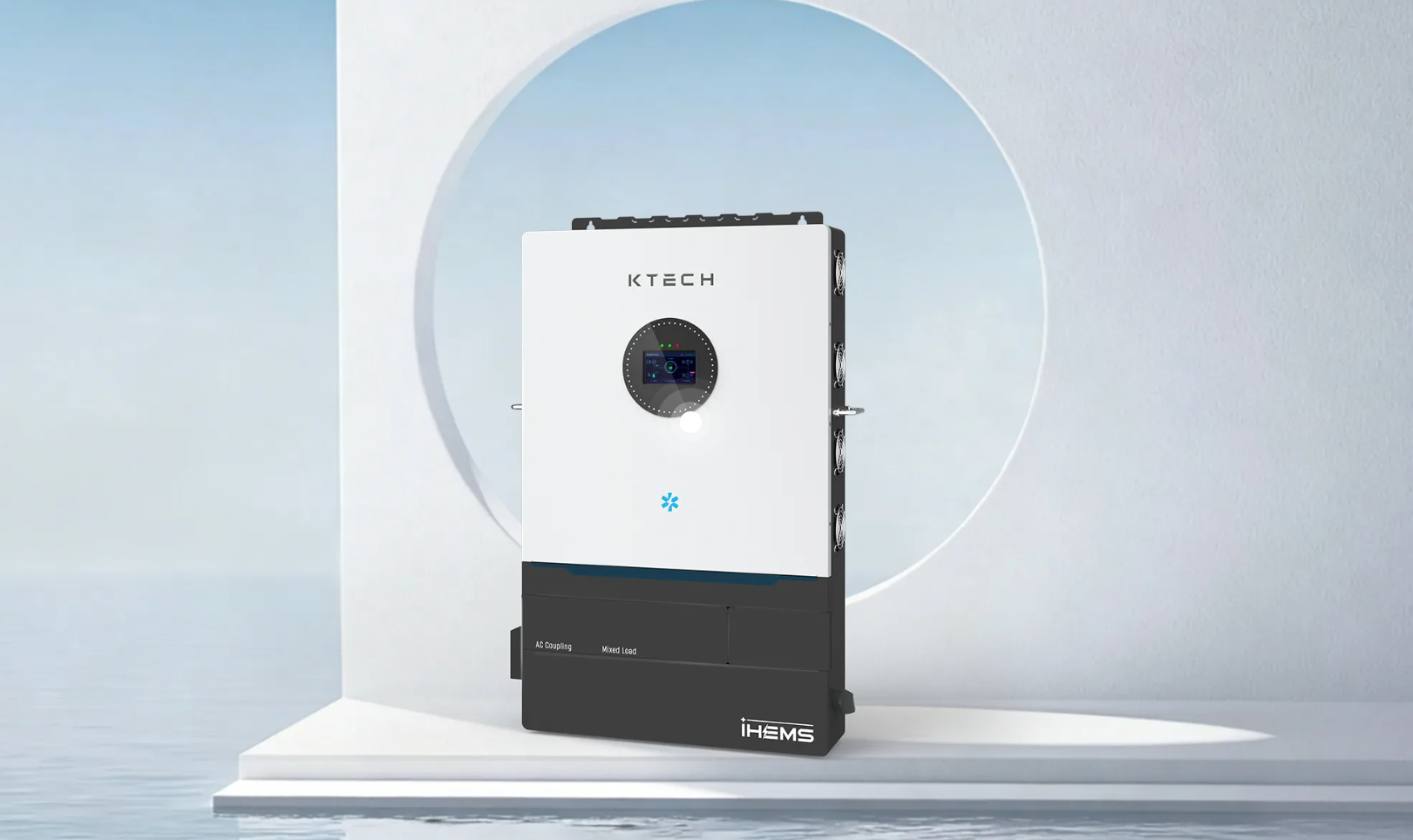
Defining the core problem
Project owners face two distinct but overlapping problems: choosing an energy storage system that meets daily load requirements, and ensuring the system integrates reliably with power electronics on-site. This problem intensifies when a site must operate off-grid or during extended outages; compatibility with an off-grid inverter becomes decisive. The immediate consequences of a poor choice are frequent cycling failures, warranty disputes, and marginal returns on capital.
Technical criteria that resolve the problem
To move from risk to reliability, evaluate these technical criteria in sequence. Treat each as a mitigation to a specific failure mode.
- Energy capacity and usable capacity: specify kilowatt-hours and apply depth-of-discharge (DoD) and round-trip efficiency to derive usable energy.
- Power rating and surge capability: ensure continuous and peak power ratings match inverter and load profiles to avoid overload trips.
- Battery chemistry and cycle life: prefer chemistries with predictable degradation curves under your expected depth-of-discharge and temperature range.
- Thermal management: confirm passive or active cooling is adequate for local ambient temperatures to prevent accelerated aging.
- Communications and control: require standardised protocols (Modbus, CAN, or equivalent) so the ESS shares state-of-charge and alarms with the inverter and monitoring platform.
- Certifications and compliance: verify IEC, UL, or local grid codes relevant to safety and installation practice.
- Modularity and expandability: select systems that allow staged capacity increases without whole-system replacement.
- Warranty terms tied to cycle counts and capacity retention: read warranty language that ties compensation to measurable degradation, not vague operational claims.
How to size an ESS without guesswork
Sizing is a sequence of questions and calculations that must be explicit. Start with measured load data, then apply conservative derating.
- Step 1 — Daily energy demand: sum metered kWh for a representative day or average over 30 days.
- Step 2 — Required autonomy: decide how many days of autonomy are essential (typical residential: 1–3 days; commercial: 1–7 days, depending on critical loads).
- Step 3 — Battery capacity formula: Required kWh = daily kWh × days of autonomy / (DoD × round‑trip efficiency).
- Step 4 — Power bank sizing: ensure continuous kW rating >= peak simultaneous load; include 20–30% headroom for safety.
Example: a 30 kWh daily demand with 2 days autonomy, 90% DoD and 92% efficiency yields Required kWh ≈ (30 × 2) / (0.9 × 0.92) ≈ 72 kWh. Use this explicit number when comparing vendor specifications.
Integration pitfalls and how to prevent them
Most failures trace to integration gaps. Address each proactively.
- Control mismatch: confirm charge/discharge setpoints and anti-islanding behavior are compatible between inverter and battery management system.
- Environmental derating: apply temperature correction factors from manufacturer tables rather than optimistic nominal values.
- Harmonic and protection coordination: verify that inverter filters and ESS protections do not conflict, causing nuisance trips.
- Commissioning tests: mandate factory-acceptance tests, on-site performance tests under simulated load, and clear acceptance criteria tied to data logs.
- Service access and spare parts: plan for accessible battery modules and spare inverters to reduce downtime.
Operational considerations: monitoring, maintenance, and contracts
Operational reliability requires measurement and procedures. Insist on continuous telemetry for state-of-charge, cell voltages, and temperature. Define maintenance actions by thresholds (for example: action when any module exceeds 45°C for more than two hours). Contractual language should specify response times for diagnosis and for replacement of defective modules.
Alternatives and trade-offs
Different chemistries and architectures solve different problems.
- Lithium iron phosphate (LFP): strong cycle life and thermal stability for frequent cycles; costlier upfront than flooded lead-acid but usually lower total cost of ownership for cycling applications.
- Lead-acid: lower capital cost, acceptable where cycles are few and budget is constrained; requires more ventilation and maintenance.
- Flow batteries: suited to long-duration storage and heavy cycling, but with higher balance-of-plant complexity and footprint.
- Hybrid systems: pairing a high-power inverter with modular batteries solves cases with both high surge and long-duration needs; ensure communication standards are matched.
Evidence from field deployments
Lessons from practical installations matter. Field trials in rural Jordan illustrated that modest oversizing of inverter power and specifying temperature-tolerant BMS behavior reduced unscheduled downtime during seasonal temperature swings. That experience highlights the value of specifying real operating envelopes rather than relying on nominal ratings.
Common contractual and procurement mistakes
Procurement errors typically weaken project outcomes. Avoid these specific mistakes.
- Buying by headline capacity alone (kWh) without requiring usable capacity calculations under specified DoD and temperature.
- Accepting generic warranty periods without performance metrics tied to retained capacity at given cycle counts.
- Neglecting to require interoperability tests between inverter and ESS during factory acceptance.
- Failing to budget for installation auxiliaries: racks, breakers, HVAC and monitoring gateways often add 10–18% to system cost.
Decision checklist before award
Use this concise checklist to make the final decision.
- Do the usable kWh and continuous kW meet calculated demand with headroom?
- Are control and communication protocols proven with the selected inverter?
- Are temperature derating and cycle-life guarantees explicit and measurable?
- Is spare-part support and service response time contractually defined?
- Has the system passed integrated factory and site commissioning tests?
Synthesis
A problem-driven approach reduces the decision to verifiable requirements: capacity under operational conditions, power compatibility, thermal resilience, and contractual clarity. When these variables are specified and tested, procurement becomes predictable rather than speculative; Ktech aligns product modularity, communications, and warranty structure to those very requirements, making it straightforward to map project needs to system specifications without rhetorical overstatement.

