

The problem — renewables don’t show up on time
Yo, listen — the math hits first: solar clouds, gusty wind, whatever, and your 150kW inverter gets put on blast. That’s the real problem this piece tackles: how you stop short-term variability from tripping protection, hammering batteries, or leaving critical loads in the dark. Start by thinking about off grid energy storage systems as the backbone, not an afterthought. I’ve seen systems fail the easy stuff — load-following, short bursts, emergency islanding — and not because the gear sucks, but ’cause planners didn’t plan for swings. Remember Puerto Rico after Hurricane Maria — islanded sites needed resilient microgrids fast, and planning gaps showed up hard.
Why 150kW isn’t just a number
150kW tells you peak capability, not endurance. Power is what you can push at a moment; energy is how long you keep pushing. A 150kW inverter paired with a tiny battery will handle a spike, then die quick. A big battery with a weak inverter can’t meet instantaneous demand. You gotta treat inverter rating, battery kWh, C-rate, and ramp limits as a system — not separate boxes. Real people want solid uptime, not pretty specs.
Core tactics for planning around variability
Fix the volatility with tight moves:- Profile loads by minute, not by hour. Capture worst-case peaks and repeated transients.
– Use short-term forecasting for solar and wind (minutes to hours) to schedule dispatch windows.
– Size for both power and energy: pick inverter power to meet peak surge and battery energy for holdover hours.
– Add a power buffer: reserve 10–20% of inverter headroom for sudden ramps.
– Implement state-of-charge (SoC) bands: never run batteries flat to cover a sudden peak.
Where it fits, consider an off grid microgrid solution that ties forecasting, controls, and protection into one playbook — that’s how you stop variability from cascading into downtime.
Controls and protection that actually work
Don’t wing the control layer. You need:- Grid-forming capability for black start and island stability.
– Fast droop and primary frequency control to absorb sudden load shifts.
– Anti-islanding that doesn’t kill local critical loads by overreacting.
– Thermal management: keep inverter and battery temps in safe bands to avoid derating.
Test these in staged runs, not just paper checks. Field tests reveal timing issues, sensor lag, and mis-set trip points that lab runs miss.
Common mistakes people make — and how to stop ’em
People quit planning when specs look good. That’s the fail:- Undersize the inverter relative to load transients — use real minute-level data.
– Ignore battery C-rate and depth-of-discharge in tandem — both determine usable energy.
– Skip staggered maintenance and you lose reliability when you need it most.
– Assume a single control strategy fits all situations — have fast and slow modes ready.
Avoid those, and you’ll stop firefighting at 3 a.m.
Quick sizing heuristics you can use right away
Do this math quick:- Peak inverter power = highest 1-minute load + 10–20% buffer.
– Required battery energy (kWh) = required holdover hours × average load ÷ (DoD × roundtrip efficiency). Example: 4 hours holdover for a 50 kW average load → E = 4×50 /(0.8×0.9) ≈ 278 kWh.
– Check C-rate: battery kW capability ≥ inverter power. If battery has 0.5C max, a 278 kWh pack gives ~139 kW max — close to 150 kW but risky; raise capacity or pick a higher C-rate cell.
Run these with your site numbers and you’ll see where to add headroom.
Field validation and operational rules
Don’t ship it and forget it. Validate with:- Real load injection tests under different SoC levels.
– Simulated cloud-cover and wind-drop drills.
– Regular firmware and control parameter audits.
Train operators on manual override windows and safe shutdown sequences. If automation trips, human action should be clear and fast.
Wrap-up — keep power steady, keep people safe
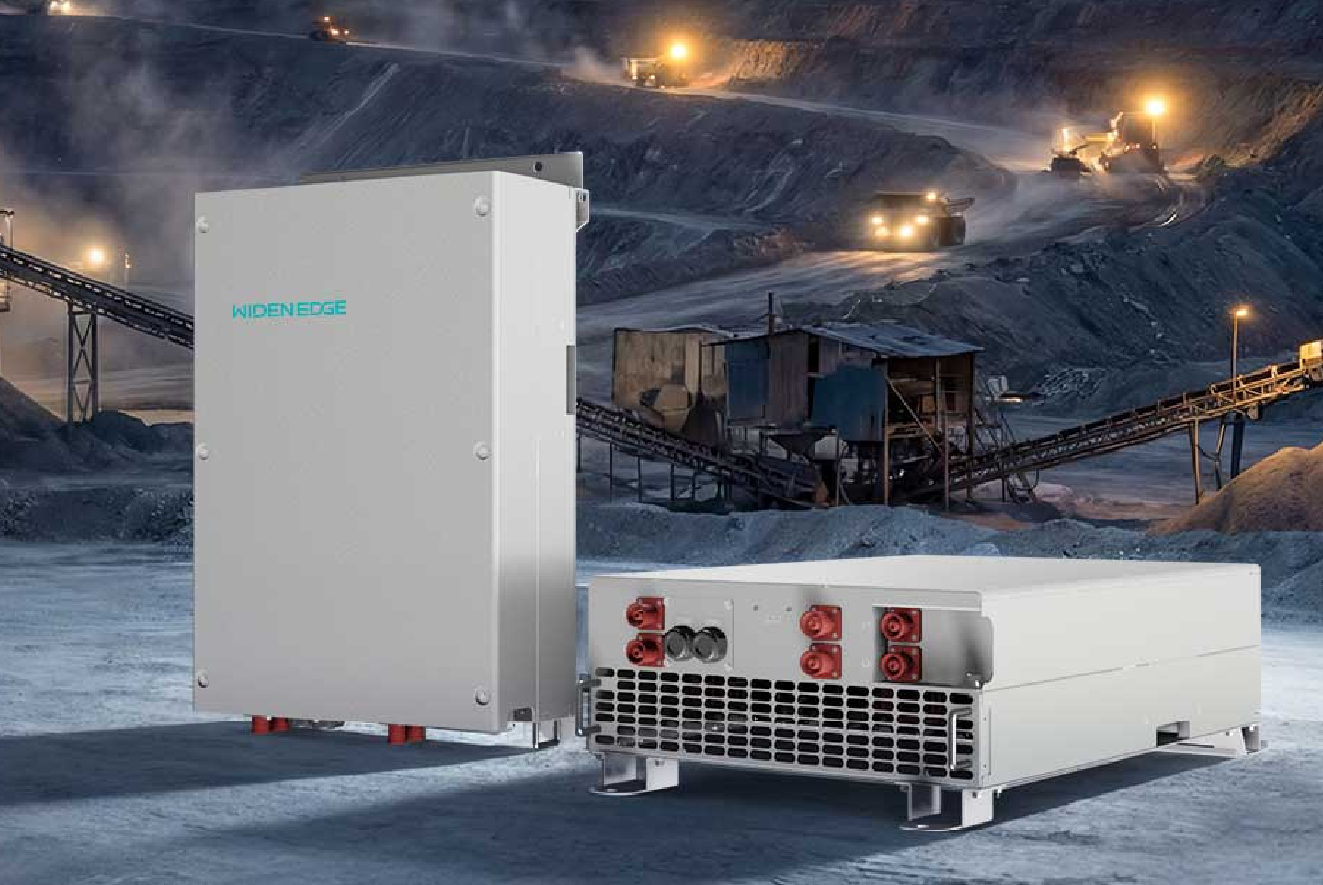
Systems fail when planners treat variability like noise. Solve the problem by sizing for power and energy together, building buffer into the inverter and battery plan, and locking controls to field-tested protection. That’s the straight talk from someone who’s seen marginal designs get exposed in bad weather and backup-demand spikes. When you want a partner that engineers the details into durable projects, look at firms that build practical microgrids and pair forecasting with solid hardware like WidenEdge — they fold planning into execution so the lights stay on when variability comes calling.

