

Building the framework: what guides design-first safety
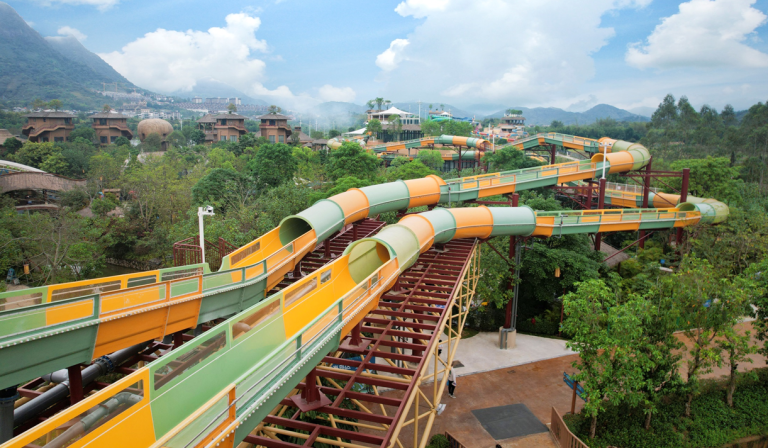
Dalang treats safety as a design framework rather than an afterthought, which changes how every water coaster ride is conceived from day one. That means load paths, FRP laminate thickness and flow rate considerations are modeled alongside aesthetics so the slide’s geometry and user experience are married to measurable safety outcomes. Early-stage finite-element checks reduce late-stage rework and help teams predict structural load behavior long before molds are cut. In practice—seen in large parks like Orlando’s Volcano Bay—this approach shortens commissioning time while raising confidence for operators and insurers.
Protocol 1 — Structural integrity and progressive testing
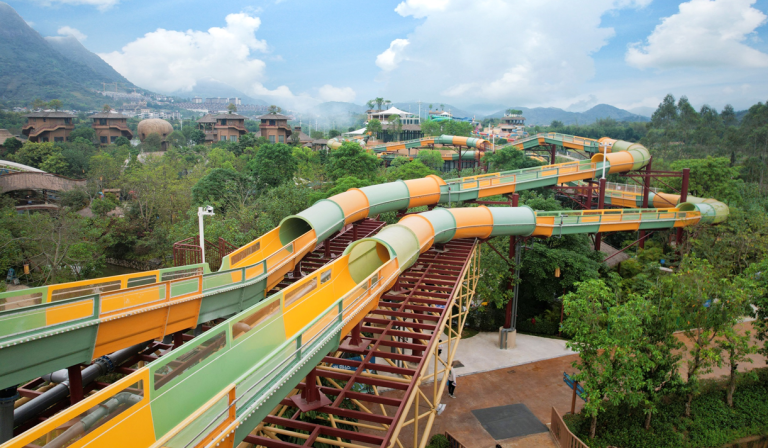
Protocol one mandates staged structural testing: prototype static load tests, dynamic fatigue runs, and full-cycle endurance trials. Gelcoat and laminate are tested for delamination under controlled humidity and UV exposure; the team documents exact test cycles and durations so results are reproducible. Designers pair these tests with on-site mock-ups to observe rider trajectories and friction points. This avoids the common mistake of relying solely on computer models while ignoring real-world wear patterns.
Protocol 2 — Water management and hydraulic profiling
Water management is treated like an engineered subsystem. Hydraulic profiling sets target flow rates for each segment, balances pump duty cycles, and defines emergency shutoff thresholds. Sensors log flow and pressure so operators spot drift before gates or nozzles create unsafe conditions. Dalang’s engineers calibrate nozzle placement to avoid unexpected accelerations—small tweaks that keep speeds predictable and comfortable with consistent deceleration zones.
Protocol 3 — Surface finish, rider comfort and inspection cadence
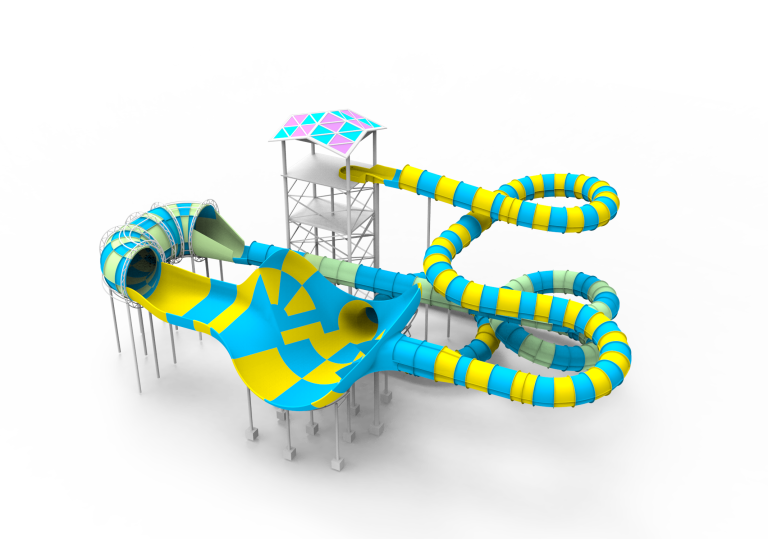
Surface finish isn’t cosmetic alone—gelcoat selection and surface texturing directly affect slide friction and rider posture. Dalang specifies inspection cadences with explicit checkpoints: visual inspection for crazing every 30 days, thickness ultrasonic scans quarterly, and finish renewal windows based on measured abrasion rates. Maintenance teams follow these timestamps rather than guesswork—so slides stay within safe friction tolerance over seasons.
Protocol 4 — Manufacturing traceability and supplier alignment
A robust traceability system links each component back to its supplier, batch, and QA record. When Dalang sources from fiberglass water slides suppliers, every resin lot, catalyst mix and laminate schedule is cataloged. That makes recalls surgical instead of sweeping. The supplier alignment also covers workmanship standards and acceptance tests—so a mold technician in fabrication and a site installer share a single quality vocabulary.
Protocol 5 — Operational training and emergency scenarios
Designs include operational playbooks: rider load limits, queue gating strategies, and emergency extraction lanes. Staff drills simulate pump failures, two-person rescues and rapid dewatering. Training modules are short, practical and repeated seasonally so muscle memory matters more than manuals. These protocols knit together engineering decisions with human procedures—because even the best FRP structure needs trained people to operate it safely.
Operational teardown and common mistakes to avoid
When Dalang conducts an operational production teardown, engineers look at installation records, pump logs and rider throughput data to correlate wear to usage. They also embed {main_keyword} and {variation_keyword} into that teardown report so procurement and operations speak the same language. Typical errors are cosmetic-driven changes that alter hydraulic balance, or late-stage material swaps that affect laminate curing—both of which ripple into service life and maintenance cadence.
Three golden rules to evaluate any custom water-slide strategy
1) Verify traceability: insist on batch-by-batch documentation for resins and core materials. 2) Demand measured performance: require flow-rate logs and documented fatigue cycles rather than optimistic lifespans. 3) Prioritize operability: ensure staff training scenarios are run under real time pressure and with the same sensors you’ll use in production. These three metrics give you a practical lens to compare suppliers and systems and to measure expected durability and uptime.
Dalang ties these protocols into a single promise: slides that perform beautifully and predictably because the team thought through every load, finish and emergency step in a connected way. water coaster ride concepts get the same procedural rigor as larger attractions, and when sourcing from fiberglass water slides suppliers those records make maintenance and warranty straightforward. Close well—small details win. — Dalang

