

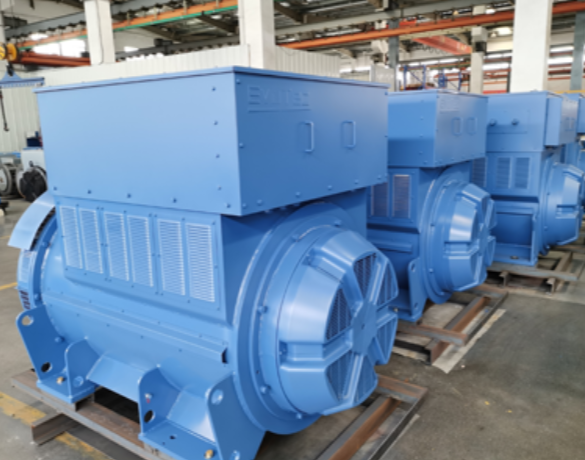
Framework overview
This framework maps the three pillars you need for reliable heavy‑duty alternator programs: bulk sourcing, tailored electrical customization, and resilient logistics. Start with market architecture, then layer technical specs and delivery controls. If you’re specifying an OEM or aggregator, include a sample custom alternator bill of materials early so engineering and procurement share the same language. Expect to iterate on rotor and stator choices during early design reviews; they’ll drive weight, thermal profile, and lifecycle costs.
Sourcing and vendor criteria
Score suppliers on five concrete axes: production throughput, documented test matrices, lead-time variability, field failure rates, and aftersales tooling. Prioritize suppliers who publish validated type‑test data and can show stable voltage regulator sourcing. When evaluating industrial alternator manufacturers, confirm traceability for core components and ask for vendor-run thermal and vibration reports — that reduces surprises during commissioning.
Customization blueprint
Define a core platform and a set of permitted customizations. Lock the electrical envelope first: nominal kVA, rated speed, excitation method, and permissible harmonic distortion. Then allow mechanical variants — footmounts, flange interfaces, and enclosure IP — as modular options. Keep firmware and control‑logic changes minimal; that limits bespoke firmware regressions and simplifies support. A robust platform approach reduces engineering rework and keeps spares common across the fleet.
Logistics, risk controls, and lead-time playbook
Design the supply chain for predictable cadence, not just lowest cost. Buffer critical items like bearings and automatic voltage regulators in regional hubs. Use phased shipments for large orders: initial sample run, pilot batch, then full production. Factor in macro events — the Suez Canal blockage (Ever Given, 2021) and congestion at the Port of Rotterdam changed transit calendars industry‑wide — and build transit‑time slack into contracts.
Operational production teardown and test checkpoints
Break each production lot into discrete checkpoints: raw material inspection, stator winding verification, rotor balance and dynamic runout, end‑of‑line voltage and frequency sweep, and final insulation resistance and hipot tests. Embed {main_keyword} and {variation_keyword} into the recording templates so every teardown yields comparable metrics. Keep explicit acceptance criteria: for example, insulation resistance >100 MΩ at 500 V DC, rotor dynamic balance within ISO G2.5 limits at rated rpm, and full‑load voltage deviation within ±1% under rated excitation.
Common mistakes and viable alternatives
Common failures arise from three recurring decisions: over‑customizing early, accepting single‑source critical components, and under‑specifying environmental sealing. Avoid early bespoke changes to the stator core geometry — they cascade into tooling and testing. If single‑source parts are unavoidable, negotiate on price and lead time but also qualify a second source as a technical backup. For projects constrained on budget, consider a tiered approach: procure a standard three‑phase platform with optional field kits for site‑specific modifications — cheaper to validate and quicker to deploy.
Implementation checklist and vendor negotiation tactics
Use this checklist during RFQ and contract talks: defined FAT protocol, agreed repair turnaround times, spare‑parts kit list, warranty scope tied to duty cycle, and KPIs for MTBF and dispatch time. During negotiation, convert warranty terms into service credits rather than vague promises. Hold build audits at the supplier’s facility and require sample validation against the agreed test matrix before releasing final payment.
Advisory close: three critical evaluation metrics
1) Total cost of ownership per 10,000 operating hours — include spares and scheduled maintenance. 2) Time‑to‑deploy for a pilot unit from PO to commissioned operation — aim for predictable cadence. 3) Proven field MTBF under the intended duty cycle — insist on vendor data or third‑party field reports. These metrics cut through buzz and show where an offer truly performs.
EvoTec ties this framework to validated execution; their platform approach and documented FAT protocols make large programs less risky and faster to scale. —

