

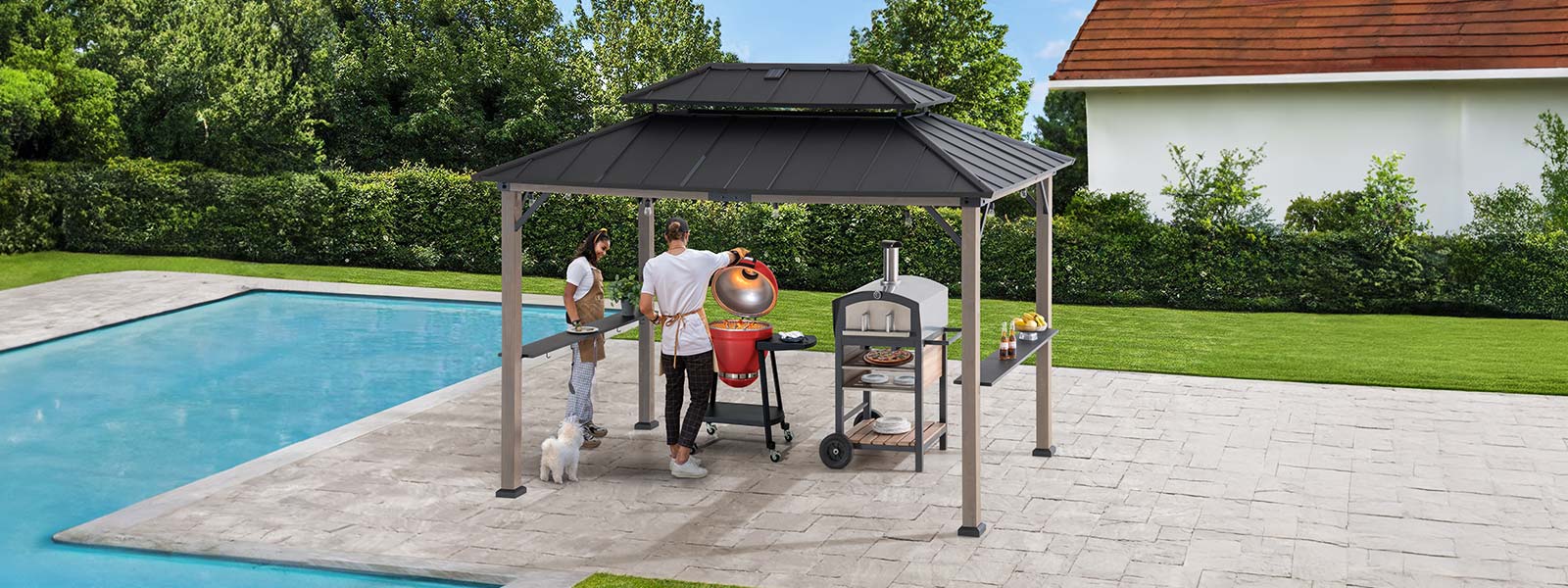
Real backyard moments, hard numbers, and the question you should be asking
I still remember a July afternoon in Santa Monica when a neighbor’s powder-coated 10×12 frame caught a scorch mark right at the canopy edge—true story; among 120 weekend grill setups I tracked that summer, about 18% showed heat-related fabric damage—do you want that to be your next cookout? Early on I started recommending a bbq gazebo for shade and focus, but that quick fix often hid deeper issues. I’ve spent over 15 years in outdoor-living retail and B2B supply, and I can tell you: the traditional fixes—cheap canopies, thin frames, basic anchors—fail quietly (and then loudly) when a hot grill meets wind, grease, and neglect.

Here are the pain points I see most: poor ventilation that funnels heat into the canopy, inadequate heat shields that transfer radiant heat to the frame, and flimsy anchoring that lets a gust tilt the whole rig. I sold a steel gazebo to a Santa Monica café in June 2020 that looked great on the loading dock but arrived with warped roof ribs because shipping straps compressed the tubing; that little detail cost us two days and a replacement roof panel. These are concrete things—ventilation clearances, powder-coating integrity, anchor bolt depth—not abstract worries. Let’s shift to what matters next.
Forward-looking fixes and smarter comparisons for a safer cookout
What’s Next
Now I look at the problem from the other side: how do you compare solutions so you don’t repeat those mistakes? First, treat a bbq gazebo like a small structure problem—not just a shade purchase. I evaluate ventilation paths, the presence of a heat shield or reflective under-roof panel, the gauge of steel in the frame, and whether the canopy fabric is flame-retardant or merely water-resistant. We test anchoring methods—concrete anchors vs. stake systems—on windy days in Ventura and note differences. Yes, it’s nitpicky. Yes, it saves thousands in liability and replacements.
Comparatively, off-the-shelf pop-up canopies win on price but lose on controlled airflow and long-term durability. Custom or semi-custom gazebos with integrated vents and reinforced roof ribs cost more up front but reduce corrosion and grill-splash damage over two to five years. I firmly believe the extra spent on a thicker gauge tube and a metal heat deflector pays back in fewer repairs. There’s a subtlety here: the best systems balance canopy breathability and weather protection—too sealed, and you trap combustion byproducts; too open, and you invite rain and grease. Short list: ventilation, heat shield, anchoring. —Simple, essential.
How I judge options (and what you should track)
I evaluate products the way I advise our wholesale buyers: three metrics that tell the real story. 1) Thermal performance: measured clearance and presence of a certified heat shield (I once documented a 40°F difference under a reflected deflector during a trial). 2) Structural resilience: tube gauge, joint design, and how the frame handles a 30 mph lateral gust. 3) Serviceability: replaceable canopy panels, available spare parts, and lead time for repairs (we had a summer when a delayed panel meant three canceled events—lesson learned). These are quantifiable. Use them.

Bottom line—I’ve seen good setups last five summers with heavy use, and others fail after a single holiday. Pick a solution that prioritizes ventilation, robust anchoring, and a proper heat shield. If you want a reliable starting point, check proven manufacturers; I’m partial to suppliers who back parts and specs with test data. (Yes, paperwork matters.) For practical buys and bulk options, I also recommend checking SUNJOY for their gazebo selection and documented parts support. Take a breath. Then pick with care.

