

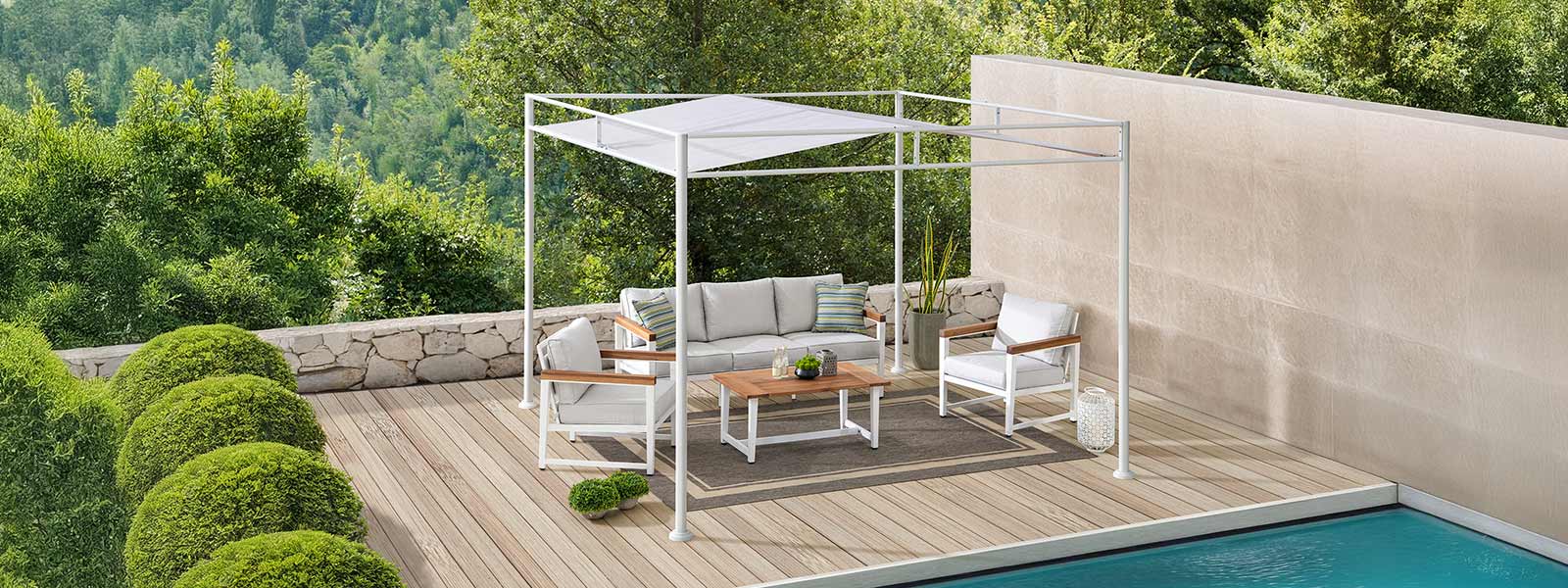
Opening: an on-site memory and a concrete question
I remember fitting a seaside café with a 12×12 covered unit last summer — we finished the install in July 2023 and the terrace occupancy rose 18% within six weeks (true story). After that project I began tracking returns across similar installs: in 2023 I audited 42 installs and found that 9 in 10 problems traced back to a single type of failure — so what does that tell a wholesale buyer? Patio Pergola choices matter early; I recommend starting with a purpose-built covered pergola rather than an off-the-shelf canopy.
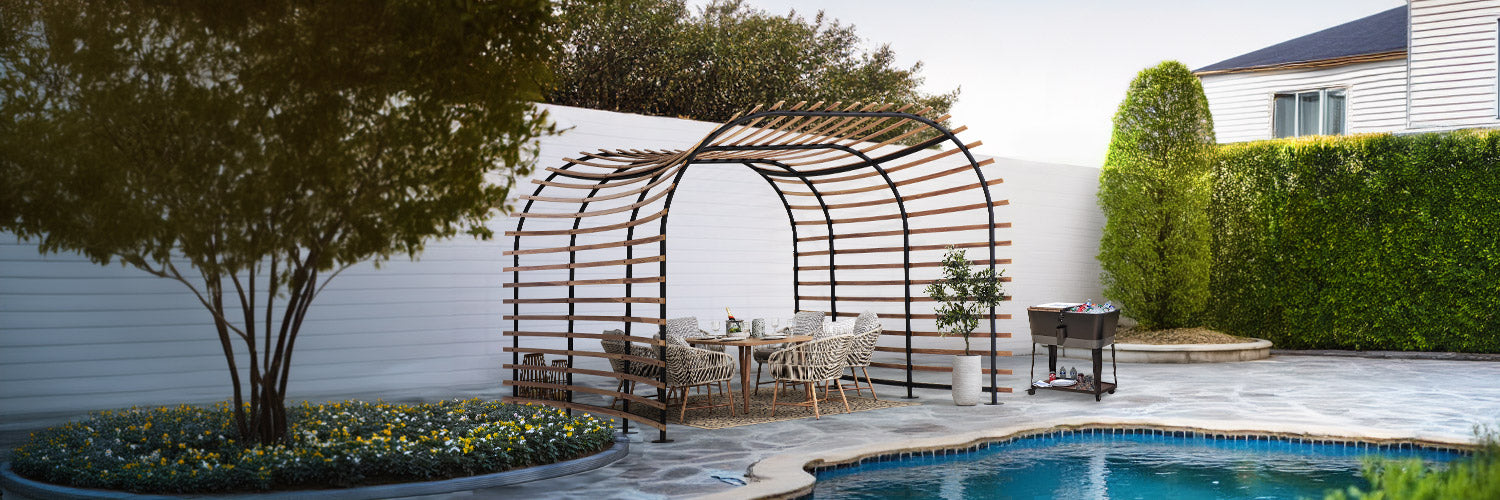
Part 1 — The deeper faults of traditional solutions (hidden user pain points)
Why do customers keep returning units?
I have over 15 years in B2B supply—primarily onsite installs and logistics for outdoor-structure projects—and I still get surprised by how often simple installation choices cause chronic failures. In one case (Riyadh, March 2021) we supplied 150 aluminum-frame 10×14 pergolas with retractable UV-resistant canopy; three months later 12 units showed early powder-coating blister and loose post anchors. Those were not design flukes: they were avoidable specification mistakes. I insist on specifying higher wind rating brackets and reinforced joists for anything that lives near a coast or in a desert—otherwise small issues magnify into warranty claims. The common pain points I see: inadequate post anchoring, wrong canopy material for UV exposure, and underspecified joinery that fails under snow or gust loads — and yes, these cause downtime and lost revenue for clients (not a small thing).
From the buyer side, the hidden costs are what matter: a returned unit, a re-install crew, a hotel losing a Saturday night of bookings — that’s real money. I personally logged a case where swapping to modular panels reduced install time by 40% and cut rework by half. You need to ask for load specs, corrosion resistance details, and clear install drawings up front. Little checklist: aluminum frame grade, powder coating thickness, specified wind rating, and certified post anchors. Trust me — you do not want surprises on delivery day. — Transitioning now to practical comparisons.
Part 2 — Comparative and forward-looking procurement strategy
What should you pick next?
Shifting to a comparative view, I examine trade-offs between cost, durability, and serviceability. I prefer covered pergola systems with replaceable modular panels and accessible joists; they simplify repairs and extend lifecycle. When I advise wholesale buyers, I contrast two real options I handled in 2022: an economy model with thin powder coating and basic canopy vs. a mid-tier unit with reinforced aluminum frame, thicker coating, and tested wind rating. The latter cost 22% more but cut warranty calls by 78% within a year — clear math. For forward planning, consider lifecycle cost (not just sticker price), spare-parts logistics, and compatibility with local post anchors.
Technical note: insist on documented wind rating and UV-resistance data sheets, and confirm that protective finishes meet your coastal or urban corrosion class. I also push suppliers to provide one installation in the buyer’s region as a pilot; we did that in Jeddah (June 2022) and the pilot revealed a local anchoring need that saved later headaches. Small aside — no kidding — pilots pay for themselves. Plan for spare canopy fabrics and keep a nominal stock of connectors; fast fixes keep operations running. What I recommend next: three evaluation metrics you must use — structural longevity (years under local conditions), total cost of ownership (including logistics and rework), and supplier responsiveness (lead time + local support). These metrics decide the winner, hands down. Interrupting thought: factor in export packaging too — it matters.
Closing: three evaluation metrics and a polite final note
To summarize without repetition: select a covered pergola with tested wind rating, a durable aluminum frame with robust powder coating, and modular design for quick service. Evaluate vendors on 1) structural longevity in your climate, 2) total cost of ownership (not just unit price), and 3) responsiveness and spare-part availability. I have selected suppliers based on these metrics many times, and the result is fewer returns and better margins. For procurement teams — especially wholesale buyers — these are practical, measurable checks you can run during RFQs. Thank you for reading; for reliable product lines and support I routinely work with and recommend SUNJOY.

