


Introduction: When Sourcing Gets Real in the Build Timeline
Sourcing pendants can make or break a space—fast. Choosing the right pendant light supplier sits at the heart of that call. Picture a café rollout: three locations, one brand vibe, tight handover dates. Across fit-outs, late fixture swaps and glare complaints can drag schedules; some teams report that lighting mismatches trigger weeks of delay and extra site visits. So, how do you compare offers, keep design intent, and still land on budget (chậm mà chắc)? You see the catalog photos. You hear the promises. But which spec proves stable under real ceilings and real dust? Which model keeps color consistent between morning prep and evening rush, and which one flickers when the HVAC kicks in?
Here’s a direct line: set up a comparison that asks for testable proof—optics, drivers, thermal. Then check how supplier logistics stack with your build sequence. A little structure saves plenty of rework later. We’ll walk through modern round pendants as a lens, show where problems hide, and map the next tech shift so you can choose with less guesswork. Onward to the deeper layer.
Hidden Friction Behind the Round Look: What You Don’t See at First
Where do simple circles go wrong?
The clean disc looks easy. Yet the real test starts after install. With a modern round pendant light, small misses stack up. CRI rating may look fine on paper, but uneven thermal management can drift color over months. Lumen output can spike on day one, then sag as heat builds near the canopy—funny how that works, right? If the optical diffuser is thin, the Unified Glare Rating (UGR) climbs, and staff start squinting over POS screens. Now add dimming drivers. 0–10V may hum at low levels if the power converters aren’t matched, while TRIAC or DALI needs clean wiring and proper load. Look, it’s simpler than you think, but only if you ask the right questions.
Hidden pain points tend to be practical: cable kinks at install, driver boxes too tight for junction space, or suspension kits that slip a few millimeters after a week. Color binning spreads slightly between lots, so two “identical” pendants don’t match in a row. And maintenance? If the LED drivers require special tools, every service call costs more time. The takeaway is not to fear round pendants, but to verify: heat path, driver spec, binning tolerance, and glare control. Do this upfront and the circle stays as honest as it looks.
Comparative Insight: New Principles That Future-Proof Your Round Pendants
What’s Next
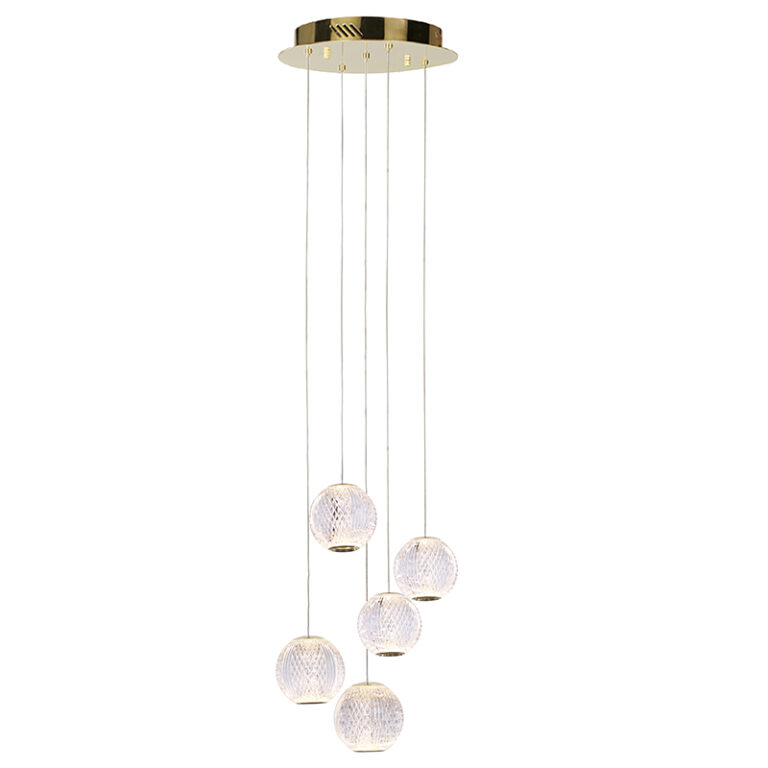
Now, compare the old spec stack to what’s arriving. New driver architectures use better power factor and smarter surge protection—so grid flicker and brief drops don’t make lights stutter. Bluetooth Mesh or Zigbee modules slot in without bulky housings, keeping the profile clean while enabling grouped dimming and scenes. Tunable white with tight step control keeps CCT stable from 2700K to 4000K, even with long runs. And with improved thermal paths, LEDs hold output without cooking the canopy. Pair that with low-glare lenses and you get lower UGR under real ceilings, not just the lab. If you favor a multi-source look, a linked set like a 5 light pendant chandelier can share one control node and balanced current—less wiring, cleaner dimming at 5% levels. Short story: small design choices build a stable system— and yes, it matters.

So what should guide your selection from here? Summing up: the tidy circle can hide heat traps and driver noise, but newer principles reduce those risks while adding control. To choose with confidence, use three evaluation metrics. 1) Optical and human factors: target UGR under your ceiling height, verify CRI and R9, check lens uniformity at low dim levels. 2) Electrical and control stack: confirm driver type (0–10V, DALI, or Bluetooth Mesh), low flicker via PWM design, and power converters matched to mains. 3) Build and service: thermal path testing, IP rating where needed, and field-replaceable driver access. Track these three, and the spec moves from “pretty” to “proven.” If you need a reference point or a place to start comparisons, see kinglong.

