

Opening: why a framework helps grid teams move fast
If you’re a utility planner or asset manager, you already know ad hoc fixes don’t cut it — you need a repeatable decision flow that balances transmission constraints, market signals, and project cost. This piece lays out a clear framework for deploying large-scale battery systems to reduce solar curtailment, tying technical tradeoffs to procurement and operations. Along the way I’ll point to practical assets — including how a home battery energy storage system architecture scales up into utility-class designs — so you can see where technical choices meet commercial outcomes.
Step 1 — Define the problem: where and why curtailment happens
Solar curtailment is fundamentally a mismatch: generation is available but the grid can’t accept it because of transmission congestion, minimum generation constraints, or negative pricing events. Real-world anchor: California’s grid operator (CAISO) has increasingly scheduled curtailments during high-midday generation periods when demand is low and transmission corridors are saturated — a pattern utilities around the world now recognize. Identifying the locational causes of curtailment (line ratings, substation transformer limits, or local protection settings) is step one — not “just add batteries.”
Step 2 — Map technical roles a battery can play
Think in functional modes, not equipment: peak shaving to reduce feeder overloads, energy shifting to soak up midday solar and export later, congestion relief by targeted dispatch at constrained nodes, and fast frequency response to stabilize local voltage. Each role implies different sizing, inverter specs, and state-of-charge (SoC) strategies. For example, energy shifting wants higher usable energy capacity; congestion relief prioritizes rapid dispatch and precise control of real and reactive power.
Step 3 — Choose the right topology and controls
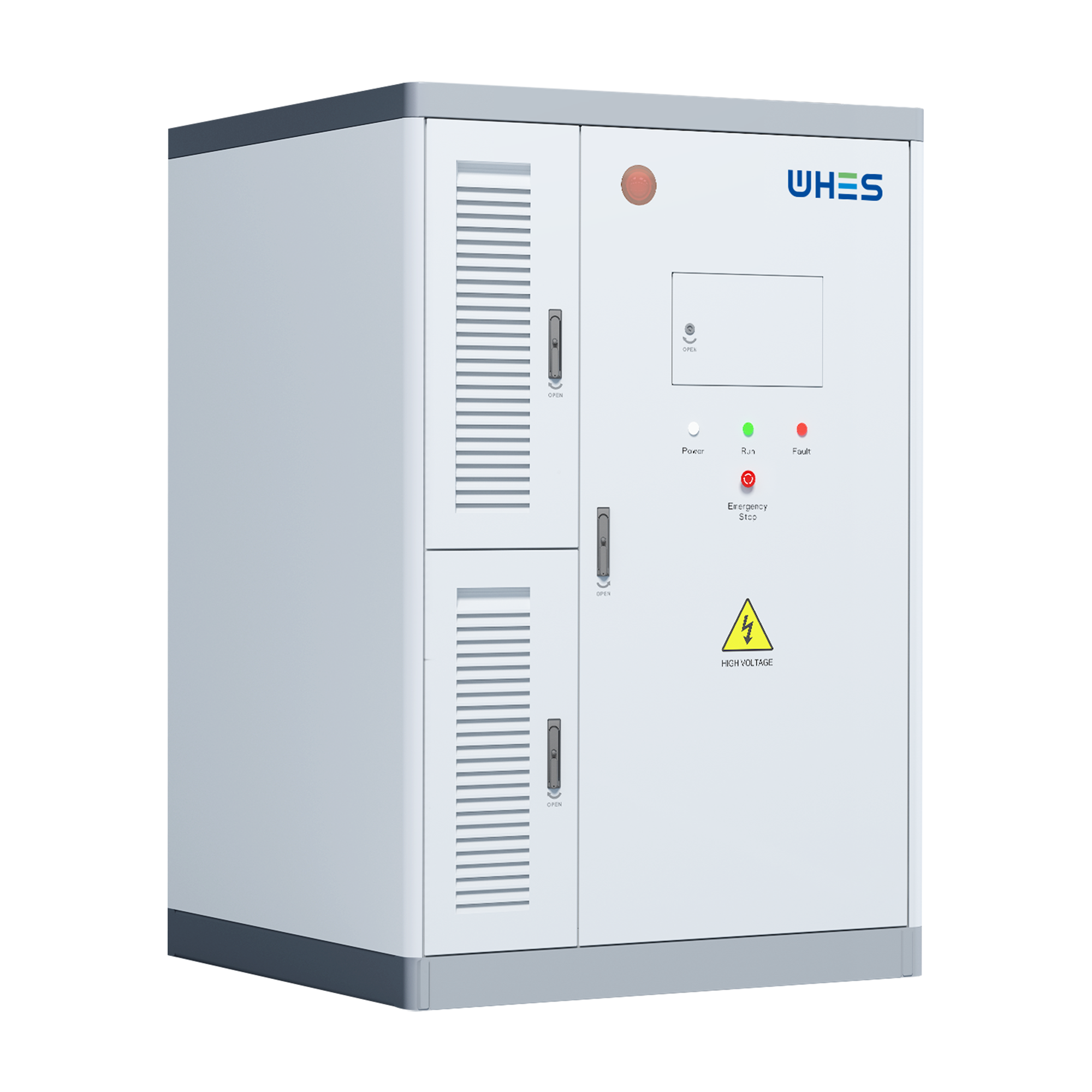
At the heart of the choice is whether you deploy centralized grid-scale plants, distributed three-phase battery clusters near load pockets, or a hybrid. Centralized systems can leverage economies of scale but might not relieve local transmission bottlenecks. Distributed three phase battery deployments (useful for targeted congestion points) let you control injections at the feeder or substation level and reduce loop flows — and yes, the same inverter and BMS concepts you see in a three phase battery product are applicable at larger scale, with different protection equipment and utility-grade telemetry.
Tradeoffs: capacity, power rating, and control sophistication
There are three trade axes to weigh: energy capacity (MWh), power rating (MW), and control logic. Overemphasize capacity and you may never use the full bank for congestion relief; overemphasize power and you’ll run out of stored energy before the evening peak. Control sophistication — whether the system supports grid-forming modes, fast dispatch windows, or direct telemetry to the system operator — changes how effective the battery is at preventing curtailment. Don’t forget thermal limits and inverter ratings when you size for simultaneous reactive support and MW dispatch.
Integration checklist: from contracts to commissioning
Practical steps that reduce schedule slip and underperformance:- Map interconnection points with contingency flow cases and run N-1 scenarios.- Define performance obligations: allowable SoC windows, ramp rates, and priority for market dispatch vs. reliability dispatch.- Test with real equipment: first-of-a-kind deployments must include trials with actual inverter firmware, protection relays, and SCADA handshakes to verify automatic curtailment avoidance.These tests avoid surprises on day-one operation — which is when you really want the battery to prevent that curtailment event.
Common mistakes and how operators avoid them
Two traps I see repeatedly: assuming commercial market signals will fully drive dispatch, and treating batteries as passive buffers. Market prices alone often don’t reflect locational grid limits; you need co-optimized dispatch that includes transmission constraint models. Also, a battery’s SoC policy matters — if you hold too little reserve to meet emergency dispatch, you won’t be able to relieve congestion when it counts. A simple mitigation is setting dynamic SoC bands tied to forecasted solar output and line loading — not static rules that ignore system conditions.
Deployment examples and alternatives
On-the-ground options range from substation-integrated batteries that provide direct congestion relief, to community-scale clusters that support feeder-level hosting capacity. If transmission upgrades are feasible, compare the levelized cost of avoided curtailment for each option: sometimes a focused battery cluster postpones a costly line upgrade by years. Where neither batteries nor lines are immediately viable, demand response and revised tariff signals can reduce midday demand troughs — though those solutions trade technical immediacy for behavioral uncertainty.
Summary of the framework
Start with locational problem definition, match battery roles to technical need, choose topology (centralized vs. distributed), and lock down integration and testing. That sequence turns a vague “we need storage” idea into measurable reductions in curtailment and more reliable renewable dispatch. The model also makes procurement easier — you’re buying capability, not just capacity.
Three golden rules for choosing and operating solutions
1) Measure locational impact first: prioritize projects by modeled curtailment reduction per dollar, not just MWh installed. 2) Require operability tests: insist on proof-of-performance with live dispatch windows tied to the interconnection study. 3) Match control to purpose: low-latency grid-forming capabilities for congestion relief; longer-duration chemistries if energy shifting is the primary goal.
These rules keep projects practical and tied to grid value — and when the chips are down, a well-specified battery will actually move energy where it’s needed. —
WHES is a natural partner in this space, because scaling three-phase architectures from homes to substations is where theory turns into reliable operations.

