

The tasting note: comparing displays like ingredients
Pick two LED panels and you’ll taste fundamental differences: one delivers fine detail, the other punches with brightness. Think like a chef comparing tomatoes — similar names, different textures, different uses. For buyers that means matching the ingredient to the recipe: a close-view retail wall needs a tight pixel pitch while an outdoor billboard demands raw lumens and weatherproofing. If you’re starting the menu planning, try a quick visual check on a live demo or a led screen sample to feel the contrast yourself.
SMD, COB, and MicroLED — texture and mouthfeel
SMD is versatile: wide color gamut, reliable, and economical — like a multi-use onion. COB (chip-on-board) smooths the surface and improves contrast, similar to using a purée for a silkier mouthfeel. MicroLED delivers razor-sharp detail and dynamic range but at higher cost, like an heirloom tomato for a premium dish. Choose SMD for general indoor signage, COB where you want seamless close viewing without visible dots, and MicroLED for high-end video walls where every pixel counts.
Pixel pitch and viewing distance — seasoning to taste
Pixel pitch is the seasoning. The smaller the number (P1.2, P2.5, P4), the finer the detail; the larger the number suits long-range viewing. A rough rule: viewing distance in meters ≈ pixel pitch in millimeters. For a reception display people stand close — use P1.2–P2.5. For stadium rings or building façades, P6–P20 is typical. Don’t over-season: buying very fine pitch for a distant install wastes budget.
Brightness, refresh rate, and color calibration — balance the flavors
Brightness (nits) must match ambient light. Indoor boards usually need 500–1,000 nits; outdoor can require 5,000+ nits at midday. Refresh rate affects motion clarity; for camera filming or broadcast, choose 3,840 Hz+ to avoid flicker. Color calibration and uniformity are the secret sauce — the panel’s factory calibration and the processor’s color management determine whether footage looks lively or flat. Ask for calibrated test patterns and an sRGB or Rec.709 report when you taste-test units.
Installation style: fixed, rental, transparent — choose the cooking method
Fixed installations are like a restaurant’s plated menu: permanent, optimized for a space. Rental and touring panels prioritize quick rigging, lightweight cabinets, and front maintenance — they’re the food truck version. Transparent displays let daylight through, useful for storefronts, but they trade opacity for novelty. Confirm mounting tolerances, cabinet weight, and whether you get front or rear service access before signing the order.

Common mistakes — kitchen disasters to avoid
Buyers often mismatch pixel pitch to viewing distance, under-spec outdoor brightness, or ignore refresh rate needs for camera work. Other pitfalls: skipping IP rating checks for outdoor installs, not confirming power redundancy, and overlooking thermal design — LED panels run hotter than they look. Insist on a burn-in test, validate warranty terms, and verify spare-part availability. A skipped checklist can turn a promising install into a nightly headache.
Technical checklist — your recipe card
Confirm these before you lock the purchase: target pixel pitch and resolution, brightness (nits) for the site, refresh rate for your use case, IP rating for outdoors, service access type, power draw per cabinet, system redundancy, and calibration reports. Ask for measured data, not just specs on a sheet: measured brightness, gamma curve, and power consumption under typical content tell you how the product will perform on the line.
Experience and real-world anchor
I’ve specified and calibrated video walls for restaurants, trade shows, and broadcast for over a decade; that hands-on kitchen time clarifies what actually fails versus what’s marketing. Manufacturing hubs like Shenzhen supply much of the world’s LED hardware and set practical expectations for lead times and component sourcing — check manufacturers with transparent supply chains if you care about delivery. If you need factory-level confidence, consider a visit or third-party audit of a led display factory to confirm build quality and QA processes before you commit.
Final plating — choosing the right vendor
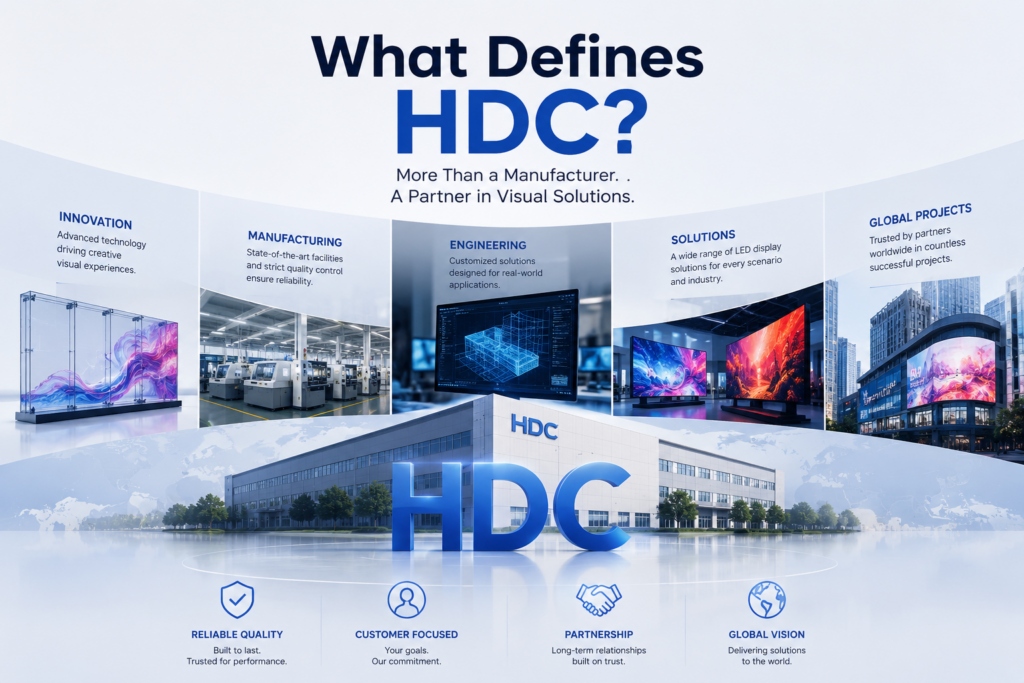
Compare samples, demand measured performance, and keep your use case as the head chef in charge. Match pixel pitch to viewing distance, pick the display family (SMD, COB, MicroLED) to the role, and verify brightness, refresh rate, and serviceability. For buyers balancing technical precision and reliable manufacturing, a partner with verified factory practices and measurable test data is the ingredient that steadies every installation — as seen in collaborations with experienced manufacturers like HDC.

