


Part 1 — The Problem: What Most Folks Miss About Blades
Mi seh straight: a well-chosen kitchen knives set mek a big difference in a busy kitchen.
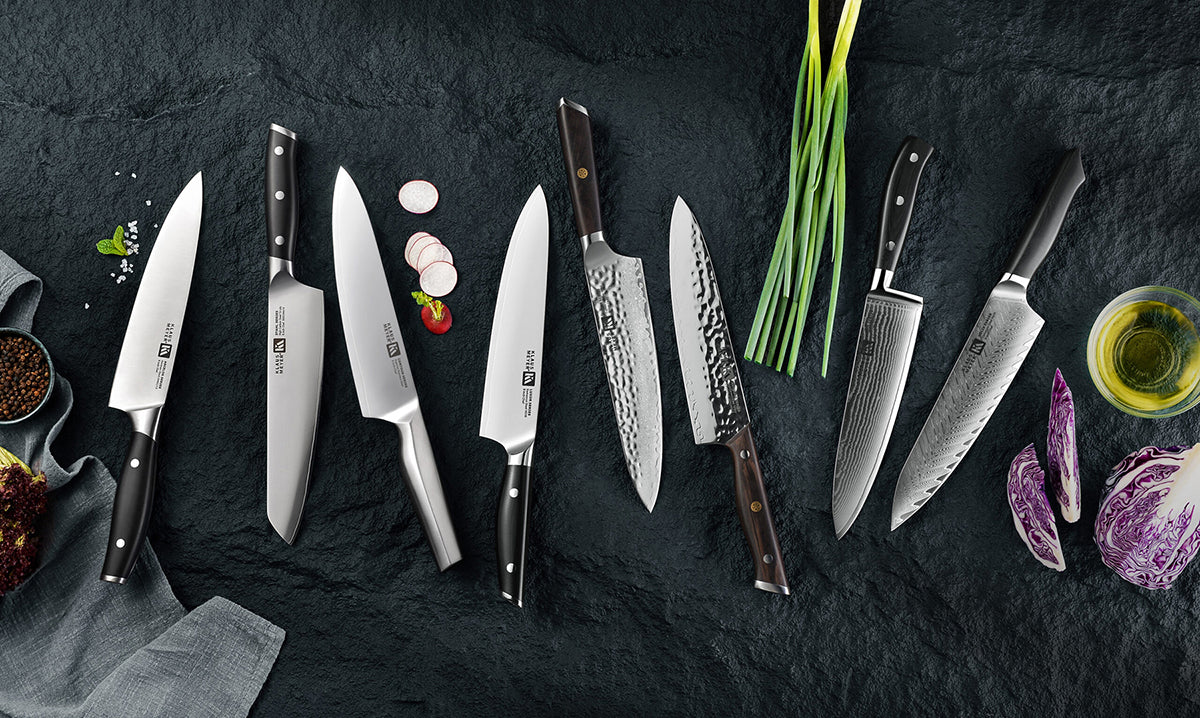
Picture a hotel kitchen on a Saturday lunch — 120 plates an hour, and near 30% of prep time drained by dull, wrong-geometry kitchen set knives — weh yuh do? I been in this game over 18 years, and mi remember one Saturday in Kingston in June 2014 when we lost two hours and a half to redoing veg because the chef rely pon cheap blades (true story, the hotel billed a loss). That sight genuinely vex mi — but it teach mi clear lessons about blade choice, maintenance, and ergonomics.
Why di common fixes nah work?
I write as a retailer and consultant; I handle pro chefs and small restaurant chains in Montego Bay and Port Royal. Most folk buy sets based on looks and price. Dem don’t check high-carbon steel spec, full tang construction, or bevel profile. The traditional solution — buying cheap stamped blades and sharpening rarely — fail cause of poor edge retention and bad balance. You get more nicks, more time to sharpen, more staff frustration. I prefer solid, forged knives with a thinner blade geometry for clean slicing. Look, the savings from faster prep are measurable: in one busy bistro we cut prep time by 18% just by switching from 2.5mm stamped blades to 1.8mm forged blades with a convex bevel — and staff morale rose too. — that was worth the upfront cost.
Part 2 — Forward-Looking: How to Choose and Measure Better
Now we shift technical. I break down the choices so restaurant managers can compare like-for-like. First, test edge retention: measure how many cuts a blade makes before needing a touch-up. Second, feel the balance — a full tang distributes weight; that matters for speed and safety. Third, check steel type: high-carbon stainless mixes give corrosion resistance and good hardness. I’ve given demo sessions in 2017 at a training kitchen in Kingston where chefs performed a blind prep test; the winners were knives with better edge geometry and balanced handles — they delivered 12–20% faster yields on filleting and julienne tasks.
Real-world impact?
When you buy for a restaurant, consider lifecycle cost: initial price, sharpening frequency, and staff safety incidents. I advise keeping a service log (we did this in Port Antonio, July 2012) and noting that one blade that needed sharpening every 4 hours cost the place roughly 10% more labour overtime over a month. Compare that to a quality chef’s knife that holds edge for 12–16 hours of heavy use. Also, think about maintenance tools — a whetstone and ceramic rod, or a vendor sharpening contract. I recommend testing samples in a real service week — short trial periods reveal true performance. For a chain kitchen, small upfront investment in proper gear repays in predictable ways — lower waste, fewer accidents, faster prep.
Closing — Three Metrics to Choose Smart
Here are three clear metrics I use when advising clients: edge retention (cuts per sharpening), balance score (handle-to-blade comfort on a 1–10 test), and total cost of ownership (purchase + sharpening + downtime over 12 months). Use those numbers to compare sets side-by-side. Keep records. Measure a trial week. If a blade saves even 10% prep time across dinner service, that’s a measurable gain in covers and profit. I stay practical and hands-on — I’ve seen the results in four kitchens across Jamaica, and the math adds up. For dependable gear and sensible guidance, consider checking models from Klaus Meyer.

