

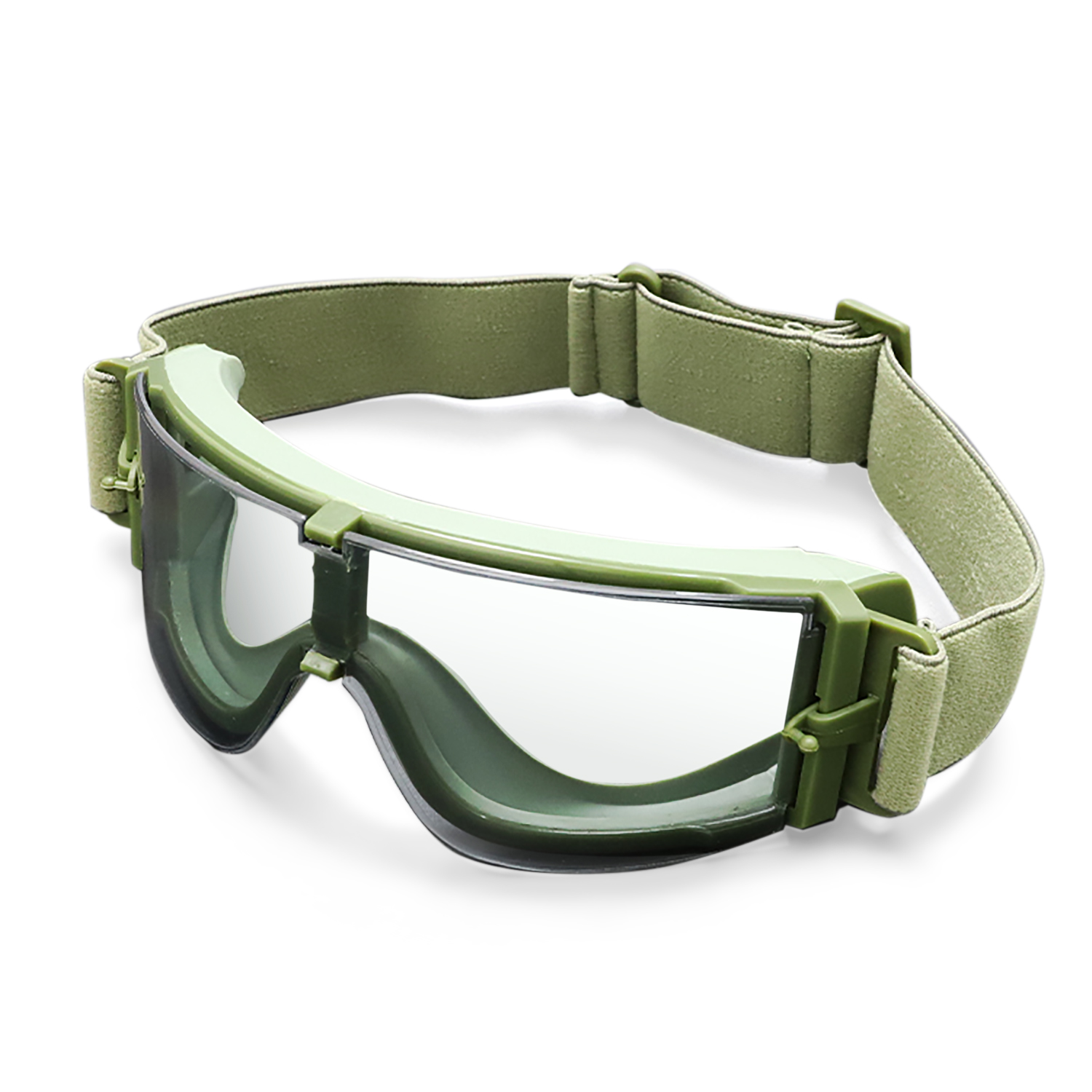
The problem: static attraction and micro-dust in controlled environments
In tightly controlled shooting ranges or test labs, electrostatic charge on lenses draws micron-scale dust that degrades visibility and can compromise safety; operators often upgrade to tactical goggles only to find coatings that fog, scratch, or fail to repel particles. The core failure mode is simple: charged surfaces and airborne particulates interact in ways that standard anti-fog films don’t address. That creates repeat cleaning cycles, increased abrasion, and unpredictable light scatter during sighting or instrumentation work. Industry terms to track here: anti-static, anti-fog, and ballistic polycarbonate lenses.
Why coatings matter: mechanisms and practical limits
Coatings change surface energy and electrical resistivity. Anti-static finishes provide a conductive path so charge dissipates; hydrophobic treatments reduce adhesion for oily particulates; hard coats add scratch resistance against abrasive cleaning. In clean-room contexts — where ISO 14644 classifications guide allowable particulate loads in semiconductor and microfabrication facilities — even submicron dust can matter, which makes coating selection a practical systems decision, not just a comfort upgrade. Coating durability, optical clarity, and compatibility with sealed gaskets or OTG (over-the-glasses) frames are critical constraints.
Common mistakes and mitigation tactics
Practitioners make predictable errors that shorten effective life and raise costs:
– Choosing coatings optimized only for anti-fog without anti-static properties, then repeatedly wiping lenses with solvents that strip the anti-static layer.
– Applying soft, hydrophobic sprays that trap charged dust at edges because they don’t modify surface resistivity—this produces haloing and glare over time.
– Ignoring frame-lens interface design; poor peripheral seals let charged airflow deposit dust along edges, defeating expensive lens chemistry. A practical mitigation: specify a multi-layer stack — hard coat, anti-static layer, then a durable hydrophobic topcoat — and validate with simple surface resistivity and abrasion tests.
Comparing coating strategies: where to prioritize performance
Compare three practical approaches by outcome: charge control, particle rejection, and longevity. Conductive anti-static coatings (transparent conductive oxides or ionically conductive polymers) win on rapid charge dissipation, but they can be delicate. Nano-textured hydrophobic coatings shed droplets and reduce adhesive forces for oily dust but don’t neutralize charge. Hard coats protect optical clarity under repeated cleaning cycles but add rigidity and may affect adhesion of subsequent layers. For most clean-room shooting roles, a balanced stack that begins with a scratch-resistant base and adds a robust, permanently bonded anti-static layer offers the best lifecycle value. When sourcing products, review independent abrasion scores and measured surface resistivity — those metrics correlate strongly with field performance. Also evaluate OTG compatibility for operators who wear prescription eyewear; fit matters as much as coatings for total contamination control. For context on available product classes, see options branded as the best tactical goggles where coating stacks are specified by application.
Three golden rules to evaluate coatings
1) Measure surface resistivity, not marketing. Aim for a finish that keeps surface resistivity below the threshold that allows charge dissipation within seconds under expected humidity. That’s the single most predictive metric for dust attraction control.
2) Demand abrasion and solvent resistance scores. Lab-grade hard coats with verified Taber abrasion cycles extend life and preserve optical clarity during repeated cleaning—this reduces field replacements and downtime.
3) Validate multilayer adhesion with real cleaning protocols. Field cleaning uses microfiber, isopropyl wipes, and occasional surfactants. If a coating delaminates or dulls after a few cycles, the spec failed. Insist on third-party cycle testing or perform your own before fleet-wide adoption — small upfront tests save large operational costs.
Those three checkpoints align technical performance with operational realities — and they expose the difference between marketing claims and durable solutions. The correct coating stack transforms tactical eyewear from a short-lived consumable into a reliable piece of kit that reduces repeat maintenance and improves focus on the task at hand.
YIJIA Optical is positioned to translate these technical criteria into product decisions that match clean-room requirements and shooter workflows — practical choices, measured outcomes.

