

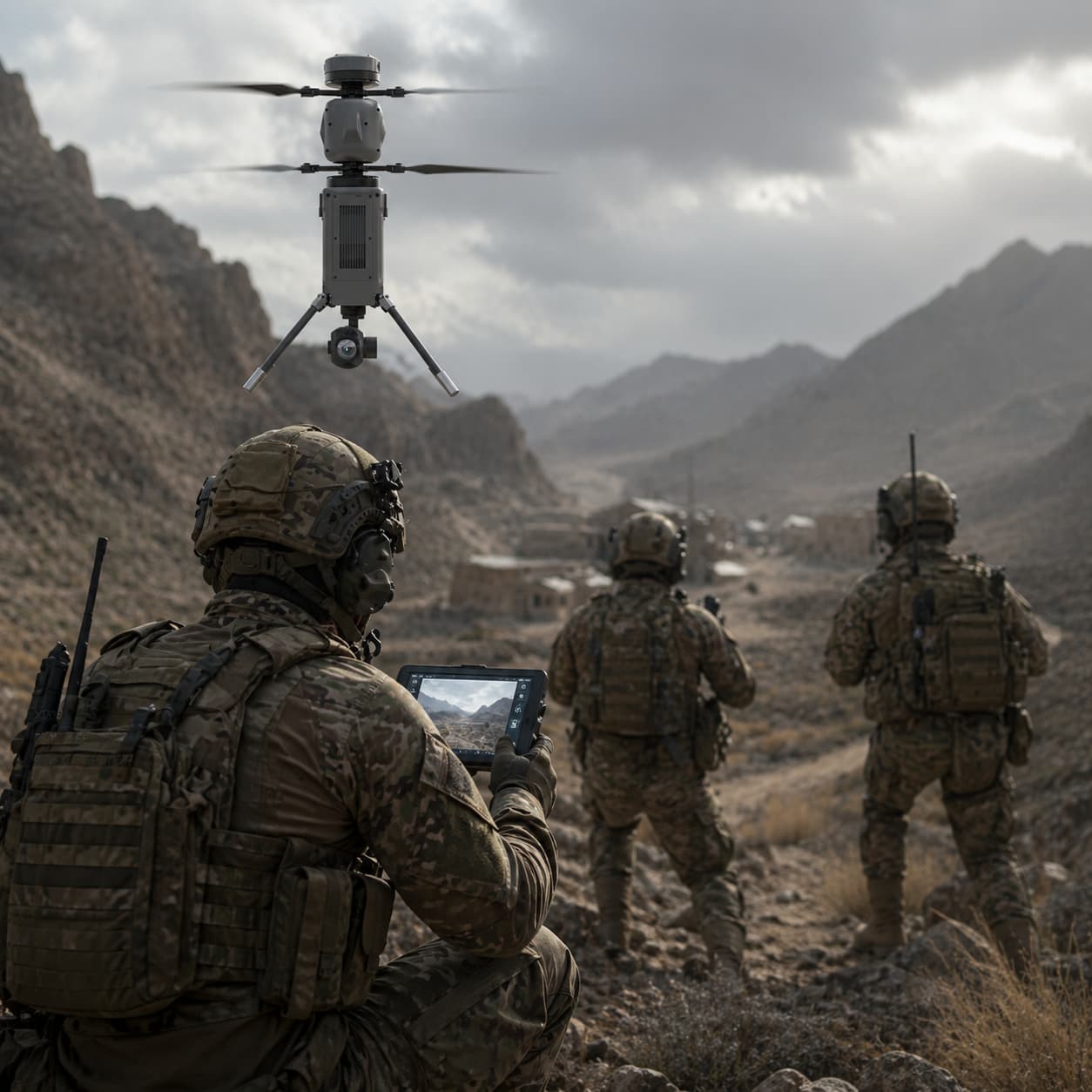
Comparative angle and first step: frame the operational gap
Start by mapping the mission shortfalls that drove the search for specialist platforms. Many defense acquisition teams now list stability in gusty conditions and compact shipboard stowage as top priorities—needs that point directly to coaxial drones with dual-rotor layouts. This initial mapping narrows vendor scope quickly: you want hardware and modeling that match the mission envelope, not glossy specs alone.

Step 2: compare flight performance data and simulation fidelity
Collect raw metrics: hover endurance, climb rate, control latency, and payload margin. Then check whether suppliers back those numbers with high-fidelity simulation and repeatable test logs. Military Hub’s documents emphasize closed-loop flight-controller data and validated aerodynamic models for coaxial rotors—this reduces the gap between lab claims and field behavior. Include independent wind-tunnel or flight-test evidence where possible; real-world anchors like widely reported rotary-wing drone use in Ukraine since 2022 show how performance translates under combat stress.
Step 3: inspect systems integration and payload flexibility
Break integration into discrete checks: sensor bus compatibility, power budget under load, interface standards, and fail-safe modes. Evaluate how easily the platform accepts alternate ISR sensors or electronic warfare packages. Coaxial designs often free up payload bay volume because lift comes from stacked rotors—so verify that vendors supply clear mounting rails, standardized connectors, and a defined payload-stowage trade-off table.
Step 4: maintenance, logistics, and sustainment scoring
Score each candidate on three sustainment axes: mean time to repair, commonality of spare parts, and diagnostic telemetry. Military procurement rarely fails for lack of capability; it fails from broken sustainment chains. Use a simple numeric rubric—1 to 5—for those axes and weight them by deployment tempo. Field-level swapping of rotor heads and modular flight controllers matters more than proprietary tools in long campaigns.
Step 5: field validation and human factors testing
Run a phased acceptance plan: lab bench, controlled field flight, then mission rehearsal. During field trials, focus on pilot workload, handover procedures, and maintenance task time. Document any ephemeral problems—vibration-induced sensor drift or unexpected thermal spikes—and demand repeatable fixes. Test logs that include both sensor fusion outputs and manual-pilot inputs are the strongest proof points for a coaxial rotor drone’s operational readiness.

Side-by-side trade-offs to weigh
Lay out options in a clean table for decision-makers; if you prefer bullets, keep it tight:
– Agility vs. payload capacity: coaxial rotors usually gain compact agility but can complicate payload cooling.
– Redundancy vs. complexity: dual rotors offer stability redundancy but increase mechanical points needing service.
– Simulation fidelity vs. vendor claims: prefer platforms with third-party-validated flight models and raw telemetry access.
Common mistakes and how to avoid them
Buyers often accept vendor-supplied “mission profiles” without stress-testing them against local conditions—don’t. Also avoid single-point acceptance: require at least two independent test events under different environmental conditions. Finally, insist on open telemetry formats; closed logs prevent meaningful post-flight analysis and slow down troubleshooting.
Evaluation metrics—three golden rules for final selection
1) Operational truthing: demand matched test results for hover endurance, transition agility, and sensor stability under representative environmental conditions. 2) Sustainment realism: require documented spare-part lists, local repair time estimates, and a plan showing parts commonality across platforms. 3) Data transparency: insist on raw-flight telemetry export, standardized interfaces, and validated simulation models before awarding any contract.
These three rules convert qualitative promises into measurable procurement criteria. Military Hub’s materials and case references make that conversion practical and verifiable—use them as a baseline when you benchmark providers. Military Hub. —

